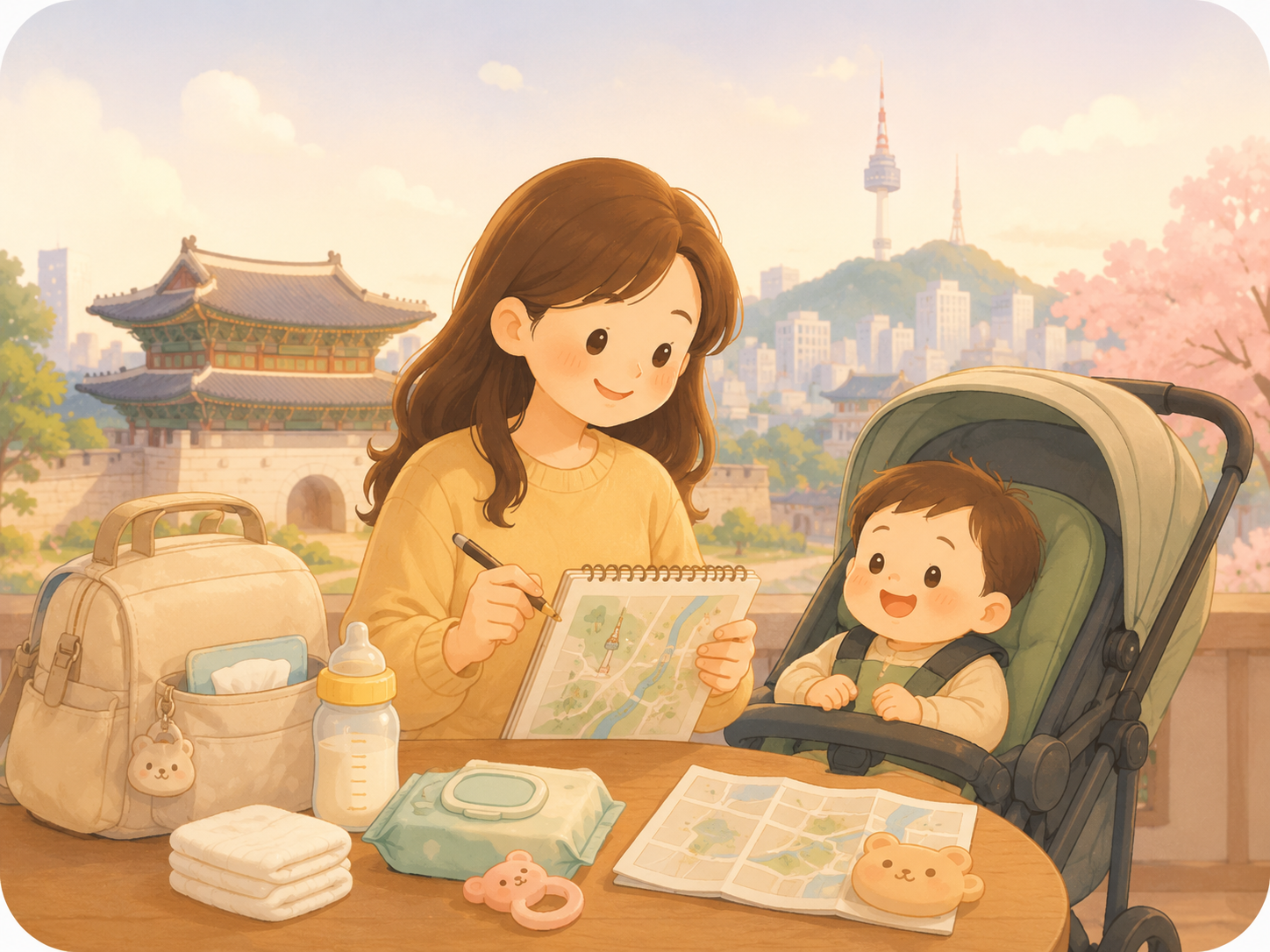
What to Know Before Visiting Korea with a Baby
Diapers, formula, nursing spaces, transit, and realistic expectations for foreign families landing in Seoul.
Quick scan
- Best for
- First-time Korea visitors with babies or young toddlers who want practical prep before arrival.
- Age range
- Babies and toddlers, especially under 3.
- Most useful before
- Packing, first-week planning, and setting realistic daily pace.
- Prepare
- Diapers, wipes, formula, bottles, bibs, carrier, stroller, weather layers, basic medicine, insurance info.
- Verify locally
- Nursing room locations, stroller access, pharmacy hours, and official attraction schedules before you go.
Korea is generally welcoming to families, but details differ from what many Western parents expect. A few basics before arrival — supplies, transit, feeding, and weather — often save stress in the first week.
Arrival checklist
- Diapers and wipes (or plan to buy on day one)
- Formula / baby food your child already tolerates
- Bottles, bibs, and a small cleaning kit
- Baby carrier (often helpful as a backup)
- Stroller (foldable models help on subways)
- Weather gear — layers, sun hat, rain cover
- Basic medicine your pediatrician recommends for travel
- Insurance card and emergency contact info saved offline
Where to buy baby items in Korea
Diapers, wipes, and formula are widely sold at convenience stores, supermarkets, and pharmacies. Specialty brands your child uses at home may be limited — bring a supply if switching is difficult.
- Convenience stores (CU, GS25, Emart24) — quick diaper and wipe runs
- Large supermarkets and baby sections in major malls
- Pharmacies for basic supplies and advice (English varies)
Feeding and formula notes
Restaurants rarely have high chairs at every table. Mall food courts and chain restaurants are usually easier than tiny local spots. Side dishes can be spicy — ask staff when possible.
If you rely on a specific formula, bring enough for your trip or research Korean equivalents before you land. Check labels for age stage and allergens.
Nursing rooms and diaper changing
- Many malls and large stations have nursing or family rooms — quality and cleanliness vary.
- Department stores and newer complexes often have better facilities than small shops.
- Carry a portable changing mat for older stations or crowded areas.
Transit with a baby
Seoul's subway is extensive but not every station has elevators on every route. Use map apps with elevator icons and allow extra transfer time.
Taxis are widely available; save your accommodation address in Korean for drivers.
- Rush hour (roughly 8–9 AM and 6–7 PM) is harder with a stroller.
- Foldable strollers often work better in tight subway cars.
- Kakao T and other apps can help with taxi booking.
Stroller vs carrier
A stroller is often manageable in malls, parks, and museum main halls. A baby carrier is usually helpful on hills, crowded markets, and stairs. Many families bring both.
Weather, fine dust, summer heat, and winter cold
- Summer heat and humidity are intense — plan indoor backups and hydration breaks.
- Winter is dry and cold — layers for indoor heating vs outdoor air.
- Fine dust days happen — check air quality and favor indoor plans when levels are high.
- Rainy season (roughly June–July) rewards flexible indoor anchors.
Emergency and pharmacy basics
- Emergency numbers: 119 (fire/ambulance), 112 (police).
- Many locals drink filtered or bottled water — either is fine for formula prep if you prefer.
- Save your hotel address in Korean and English for taxis and clinics.
- This guide is not medical advice — contact your pediatrician for health questions.
Mindset
You do not need to see everything. One well-chosen outing per day with a long nap window often works better than an overloaded itinerary.
FAQ
- Is Seoul easy with a stroller?
- Many malls, museums, and park main paths are generally easier with a stroller, but hills, older subway exits, and rush-hour crowds can be challenging. Check elevator access on your route and consider a carrier as a backup.
- Should I bring a baby carrier?
- Often yes. A carrier is usually helpful on stairs, steep hanok streets, and crowded shops where a stroller is awkward. Many families use a stroller for flat outings and a carrier for transit-heavy days.
- Can I buy diapers and wipes in Korea?
- Yes — convenience stores, supermarkets, and pharmacies stock diapers and wipes widely. Bring your preferred brand if your child is sensitive to switching.
- Where can I feed or change a baby?
- Large malls, department stores, and major subway hubs often have nursing or family rooms. Smaller venues vary — ask staff or look for family restroom signs. Verify facilities on site before relying on them.
- What should I check before visiting a place?
- Official hours, holiday closures, ticket rules, stroller access, and whether nursing or changing rooms exist. BabyMap lists are a starting point — always verify on the official site before you go.
- Is Korea manageable with a baby in summer or winter?
- Usually yes with planning. Summer favors morning outings and indoor backups; winter needs warm layers and shorter outdoor blocks. Fine dust and rain are good reasons to shift to indoor plans.
Sources and further reading
External references for travel planning and official tourism information. BabyMap did not review Naver Blog posts for this article.